


Why Grass Fed Beef Liver Capsules & Oyster Supplements Don’t Have Exact Nutrition Labels
If you’ve ever compared whole food supplements like freeze dried beef liver supplements or oyster capsules to traditional synthetic vitamins, you may have noticed something: whole food supplements often don’t list perfectly exact nutrient amounts the way synthetic supplements do.
That’s because whole foods behave very differently than isolated, lab-made nutrients.
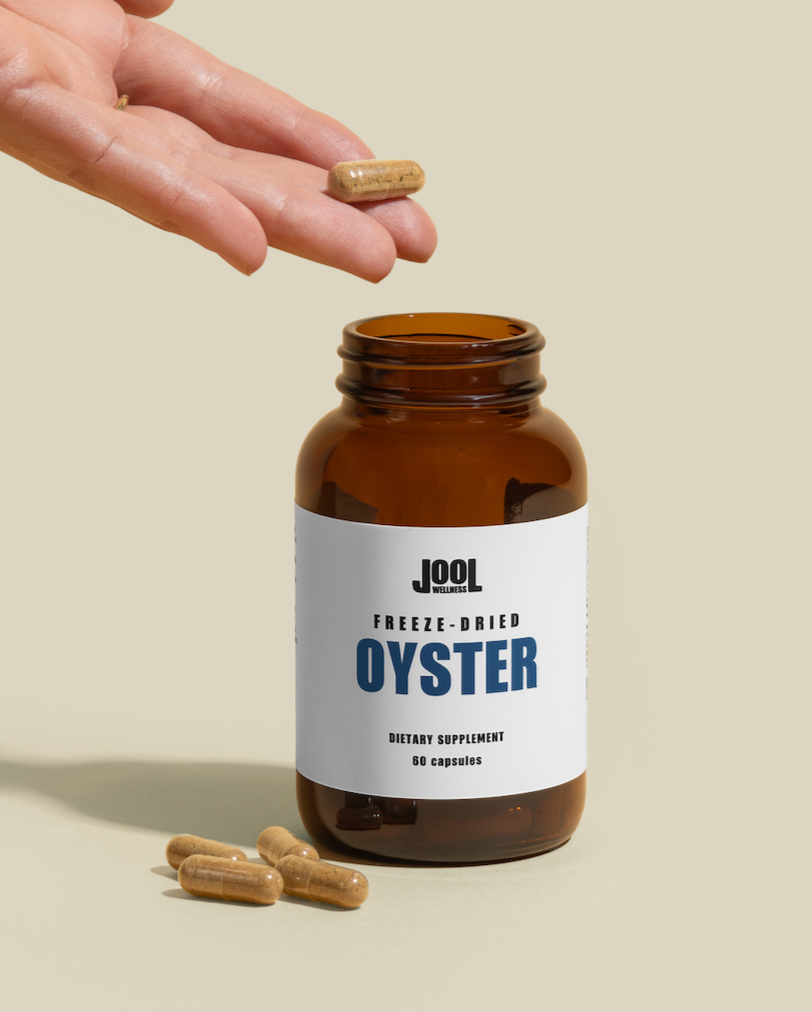
At Jool Wellness, our New Zealand beef liver capsules and New Zealand oyster capsules are made from real food, not synthetic isolates. And real food naturally varies.
Why Whole Food Supplements Don’t Behave Like Synthetic Vitamins
Our grass fed beef liver capsules and oyster supplements are whole foods, not synthetic isolates.
That means they naturally contain nutrients like iron, folate, B12, zinc, copper, selenium, amino acids, and cofactors exactly the way they exist in nature.
Synthetic supplements are different. They are created using isolated nutrients that can be standardized and controlled down to exact amounts.
But real food doesn’t work that way.
Why Nutrient Levels Naturally Fluctuate
Nutrients in whole foods naturally vary based on:
-season
- soil and water quality
- the animal’s diet
- environment and stress
- natural biological variation
That variability isn’t a flaw, it’s nature.
Our New Zealand beef liver capsules come from pasture-raised, primarily grass-fed cows whose diet naturally shifts with the seasons. During months with abundant pasture they graze on fresh grass, and during winter or periods of slower pasture growth they may also be fed hay or silage.
Just like fresh food from the grocery store, freeze dried liver supplements and oyster supplements naturally fluctuate in nutrient composition.
A steak doesn’t contain the exact same nutrient profile every single time. Neither does liver. Neither do oysters.
And we don’t try to artificially standardize them.
Why Nutrition Labels Can Look “Underwhelming”
When we do list nutrients, those numbers must be FDA-compliant and conservative.
That means they often reflect the minimum detected amount, not the full range that may naturally be present.
In reality, those nutrient levels are often higher, but labeling regulations don’t allow us to fully represent that variability.
This is one reason whole food supplements can sometimes appear less impressive on paper compared to traditional synthetic supplements that rely on isolated, standardized nutrients.
What Labels Don’t Show: Cofactors Matter
This is where whole foods truly stand apart.
For example, liver is one of the richest natural sources of folate. But it doesn’t come alone. It naturally comes packaged with:
-vitamin B12
-choline
-retinol
-amino acids
-minerals and fats
These are the cofactors that help your body actually use and absorb nutrients.
Most labels don’t reflect this synergy, but it’s exactly what makes whole foods so powerful.
Many beef liver supplement benefits come not from one isolated nutrient, but from nutrients working together in the balanced ratios nature intended.
This is one reason many people prefer whole food options like freeze dried beef liver supplements and oyster capsules over synthetic vitamins.
Whole Food Supplements vs. Synthetic Vitamins
Whole food supplements can sometimes seem “underwhelming” on paper compared to synthetic supplements that contain standardized, isolated nutrients in higher listed amounts.
That's because whole food supplements are not:
-mega-dosed
-isolated
-man made
-engineered for marketing
Instead, they contain naturally occurring nutrients working together in balanced ratios.
That’s part of what makes whole foods so unique.
Why We Don’t Mega-Dose Nutrients
Another reason these supplements can seem less dramatic on paper is because they’re intentionally not mega-dosed.
These capsules are micro-doses of liver and oyster.
In nature, humans would not traditionally consume an entire liver or multiple servings of oysters every single day. Instead, these foods were eaten periodically and consistently over time.
Our beef liver capsules and oyster supplements are designed to support a nutrient-dense diet, not override your biology.
Your body is designed to store and utilize nutrients when it’s adequately nourished and in a healthy metabolic state. It doesn’t necessarily require extreme mega-doses to function properly.
And if it feels like you constantly need massive amounts of supplements just to feel okay, that’s often a sign that something deeper may need support at the root.
Supplements Are Meant to Be Supplemental
Liver and oyster capsules are not meant to replace food. They are meant to support it.
They work best alongside:
-adequate nourishment
-enough calories
-balanced meals
-healthy digestion
-proper recovery
They fill in gaps, not override an overall poor lifestyle.
Our Commitment to Transparency
We do have a full nutrient breakdown available (it’s literally pages long), and we plan to in the future provide a more detailed nutrition label on the bottle. But we will never sacrifice honesty or food integrity just to make numbers look more impressive.
If you would like to see the label, we are happy to send it to you. You can email us at jool@joolwellness.com.
Why This Matters
Nature fluctuates. Real nourishment isn’t perfectly standardized. And that’s exactly the point.
When you shift from chasing numbers on a label to supporting your body with real, bioavailable nutrition, you start working with your physiology instead of against it.
Check out our recent podcast episode on this very topic HERE.
Try Our New Zealand Beef Liver and Oyster Today
If supporting your body with real, whole food nutrition resonates with you, our freeze-dried New Zealand beef liver and oyster capsules were designed with exactly that philosophy in mind.
Try our 100% Grass-fed, grass-finished, pasture raised New Zealand Beef Liver. We also suggest pairing your liver with our New Zealand Oyster. You can read more on the benefits and how to appropriately consume both at the same time HERE. Because they pair so well together, we created a Liver and Oyster bundle (and also a pretty sweet discount per bottle).
References:
-
Nowak, D. & Jakubczyk, E. (2020). The Freeze-Drying of Foods—The Characteristic of the Process Course and the Effect of Its Parameters on the Physical Properties of Food Materials. Foods, 9(10), 1488.
https://pmc.ncbi.nlm.nih.gov/articles/PMC7603155/ -
Coşkun, N. et al. (2024). The Impact of Freeze Drying on Bioactivity and Physical Properties of Food Products. Applied Sciences, 14(20), 9183.
https://www.mdpi.com/2076-3417/14/20/9183 -
USDA FoodData Central. U.S. Department of Agriculture.
https://fdc.nal.usda.gov/ -
USDA National Agricultural Library. Food Composition Resources.
https://www.nal.usda.gov/human-nutrition-and-food-safety/food-composition -
Bhatta, S. et al. (2020). Freeze-Drying of Plant-Based Foods. Foods, 9(1), 87.
https://pmc.ncbi.nlm.nih.gov/articles/PMC7022747/ -
Cleveland Clinic. Beef Liver Benefits and Nutrition.
https://health.clevelandclinic.org/beef-liver-benefits
 Back to Education