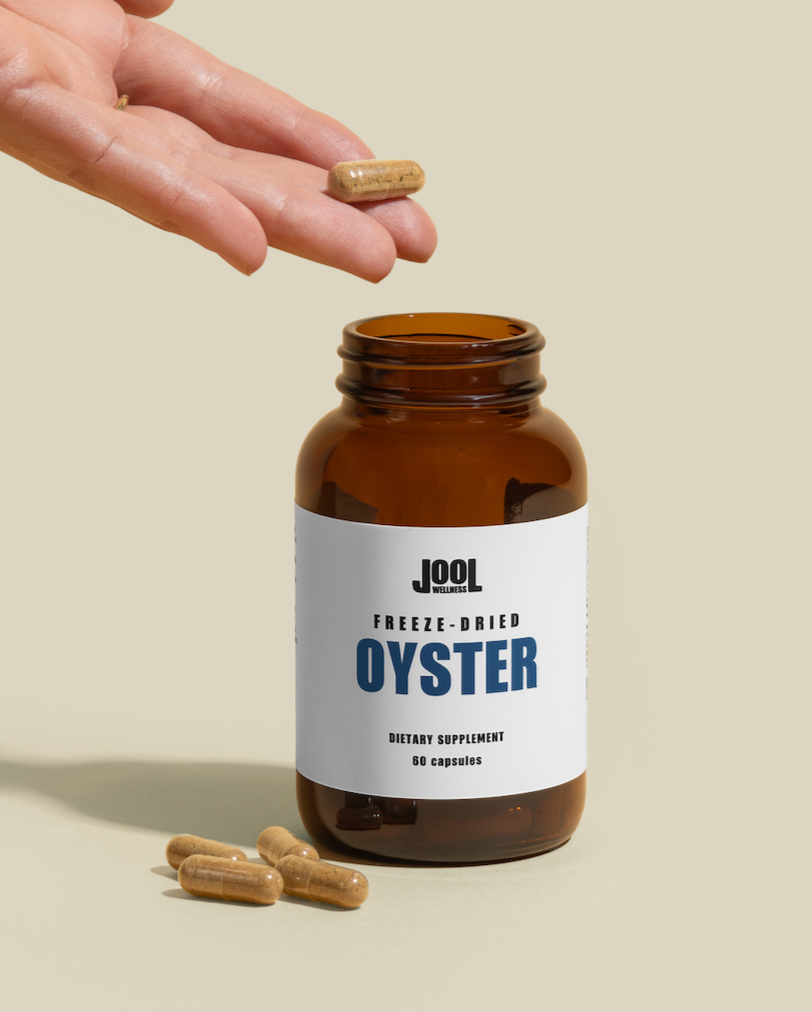



Oyster Capsules for Fertility: How Zinc Supports Egg & Sperm Quality
When it comes to fertility, most people focus on hormones like estrogen, progesterone, or testosterone. And while those hormones absolutely matter, the body cannot properly produce, regulate, or utilize them without adequate nutrients.
One of the most overlooked nutrients involved in reproductive health is zinc.
Zinc is involved in hundreds of enzymatic reactions throughout the body, many of which directly impact reproductive function, including:
- egg quality
- sperm quality
- hormone production
- DNA synthesis
- cellular energy
- antioxidant protection
Without adequate zinc, processes like healthy cell division, ovarian function, sperm production, and early embryonic development simply do not function optimally.
And because the body does not store zinc efficiently, regular intake through food or whole food supplements is important for maintaining healthy levels. This is one reason oyster capsules and oyster supplements have become increasingly popular in conversations around fertility, reproductive health, and overall vitality.
Zinc & Egg Quality
Research shows zinc plays a critical role in female reproductive biology, particularly during:
- ovarian follicle development
- egg maturation
- fertilization
- early embryo development
Adequate zinc levels are important for developing fertilization-competent eggs and supporting healthy cell division before and after conception.
Some research has shown zinc deficiency may disrupt meiosis (the specialized cell division process that creates eggs) and negatively impact oocyte quality (an immature egg cell) and developmental potential.
Zinc also appears to support mitochondrial function within the egg, which is important because mitochondria provide the energy required for proper maturation and early embryonic development.
Zinc & Sperm Quality
Zinc is equally important for male fertility. It plays important roles in:
- spermatogenesis (sperm production)
- sperm motility
- sperm morphology
- antioxidant protection
- testosterone production
Multiple studies have demonstrated that low zinc status may correlate with:
- reduced sperm concentration
- lower motility
- abnormal sperm morphology
Zinc also helps protect sperm from oxidative stress, which is important because sperm cells are especially vulnerable to free radical damage.
Why Whole Food Zinc Matters More Than Isolated Supplements
While zinc is incredibly important for reproductive health, not all zinc supplements function the same way in the body. Many synthetic zinc supplements contain isolated forms of zinc in large amounts. In some cases, high isolated doses may interfere with the absorption of other minerals like copper or create imbalances over time.
This is where whole-food sources like oysters have a unique advantage. Oysters are one of the richest dietary sources of bioavailable zinc, meaning the body can absorb and utilize the zinc efficiently alongside naturally occurring cofactors like copper, selenium, and vitamin B12, all of which aid reproductive health.
Essentially, these nutrients work synergistically to support fertility, hormone health, cellular function, and mineral balance.
Some research even suggests that oyster-derived zinc may be particularly beneficial for reproduction. In one animal study, oyster extract improved reproductive function in zinc-deficient mice, including enhanced sperm maturation and improved pregnancy outcomes, further supporting the idea that zinc from oysters is highly bioavailable and well utilized by the body.
Why Oysters Are a Fertility Powerhouse Food
As mentioned above, freeze dried oyster capsules do not just provide zinc. They naturally contain a broad spectrum of nutrients involved in reproductive health and vitality.
Zinc Supports:
- egg quality
- sperm quality
- hormone production
- immune health
- cellular repair
Selenium: Provides antioxidant support and helps support thyroid and reproductive health.
Copper: Helps maintain healthy mineral balance and supports connective tissue and cellular function.
Vitamin B12: Supports energy production, methylation, and DNA synthesis.
Together, these nutrients create a naturally balanced nutrient matrix that supports fertility in both men and women.
Why We Use Freeze Fried Oyster Capsules
At Jool Wellness, our New Zealand oyster capsules are made using freeze dried oyster meat to help preserve nutrients in their whole food form.
Freeze drying helps maintain the integrity of naturally occurring:
- minerals
- amino acids
- cofactors
- omega-3 fatty acids
without relying on synthetic isolates or high-heat processing methods. This allows our oyster supplements to more closely resemble the nutrient profile of fresh oysters.
The Missing Piece: Overall Nourishment
In our fertility practice, The HA Society, we consistently see women trying to optimize fertility while still under-eating, over-exercising, or chronically stressing the body.
And this matters.
Because supplements cannot compensate for chronic undernourishment.
Your body requires:
- adequate calories
- sufficient carbohydrates
- enough protein
- healthy fats
- rest and recovery
for nutrients like zinc to be properly absorbed, utilized, and directed toward reproductive health.
If your version of “health” requires you to constantly restrict food, ignore hunger cues, or carefully control intake, that is often a stress signal to the body, not a fertility-supportive environment. Whole food supplements work best when the foundations are already in place.
Who May Benefit From Oyster Capsules?
Oyster supplements may be especially supportive for people who:
- do not regularly consume oysters or zinc-rich foods
- are navigating increased nutrient demands
- want to support fertility naturally
- are looking for bioavailable zinc
- want to avoid excessive isolated mineral supplementation
- are focused on reproductive health, vitality, and mineral balance
Try Our New Zealand Oyster Capsules
If you’re looking for a whole food source of bioavailable zinc to support fertility, vitality, mineral balance, and reproductive health, our freeze dried New Zealand oyster capsules were designed with exactly that philosophy in mind.
Our oyster supplements are:
- freeze dried
- third-party tested
- filler-free
- sourced from clean New Zealand waters
Shop our New Zealand Oyster Capsules HERE.
References
-
Kim, A. M., & Vogt, S. (2021). Zinc and the Oocyte: Roles in Oocyte Maturation, Fertilization, and Early Embryo Development. Biology of Reproduction, 104(5), 976–985. https://academic.oup.com/biolreprod/article/104/5/976/6141166
-
Tian, X., et al. (2024). Zinc deficiency disrupts ovarian follicle development and oocyte quality through mitochondrial dysfunction. Journal of Ovarian Research, 17(1). https://ovarianresearch.biomedcentral.com/articles/10.1186/s13048-024-01442-z
-
Fallah, A., Mohammad-Hasani, A., & Colagar, A. H. (2018). Zinc is an essential element for male fertility: A review of Zn roles in men’s health, germination, sperm quality, and fertilization. Journal of Reproduction & Infertility, 19(2), 69–81. https://pubmed.ncbi.nlm.nih.gov/30462179/
-
Zhao, J., et al. (2021). Association between zinc levels and sperm quality: A systematic review and meta-analysis. Biological Trace Element Research, 199, 256–267. https://pubmed.ncbi.nlm.nih.gov/34743439/
-
Hidaka, S., et al. (2004). Dietary oyster extract improves reproductive function in zinc-deficient male mice. The Journal of Nutrition, 134(9), 2180–2186.
https://pubmed.ncbi.nlm.nih.gov/15041778/
 Back to Education