


What’s Really Causing Rapid Aging? How Undereating and Nutrient Deficiency Age the Body From the Inside Out
When “Healthy” Eating Becomes Under-eating:
In today’s culture, calorie restriction, fasting, “clean eating,” and now weight-loss drugs are not only common but are praised. Often framed as discipline, control, or optimal health, these practices can quietly push the body into a state of chronic under-fueling. While the external focus is usually on weight or appearance, the deeper consequences unfold beneath the surface, affecting metabolism, hormones, skin, hair, and long-term vitality.
The Hidden Cost of Under-eating
Under-eating does not simply change how clothes fit or what the scale says. It alters how the body allocates energy! When energy availability is low, physiology shifts into conservation mode as the body turns to prioritizing short-term survival over repair, regeneration, and longevity. Over time, this state accelerates biological aging, setting the stage for thinner skin, loss of tissue resilience, slower healing, and premature visible aging- the very outcomes our culture is desperately trying to avoid. (1,2)
Ironically, as under-fueling drives these changes, the cosmetic industry thrives on treating their surface-level effects. Yet the real lever for resilience, radiance, and longevity is not found in injectables or serums, but in restoring the biological conditions that allow the body to rebuild. (3) Understanding why under-eating accelerates aging is the first step toward reclaiming energy, structural integrity, and true, sustainable health.
How Under eating Disrupts Metabolic, Thyroid, and Hormonal Health
When energy intake is chronically low, the body shifts into a state of survival. Metabolism
downshifts as a protective adaptation, lowering resting energy expenditure and slowing
cellular activity to conserve fuel. (4) While this response is lifesaving in the short term, over time it comes at the cost of repair, regeneration, and long-term resilience which are the very processes that keep tissues youthful and functional.
A key driver of this shift is reduced thyroid hormone activity, particularly triiodothyronine
(T3). T3 is the hormone that signals cells to produce energy, turn over efficiently, and renew themselves. (5) When T3 levels fall, cellular energy production slows, and the rate at which old or damaged cells are replaced declines. (6) In tissues with high turnover (skin, hair, and the gut lining) this translates into dull skin, thinning hair, slower healing, and reduced structural integrity. Cells continue to die as part of normal aging, but without sufficient energy and thyroid signaling, they are not replaced at the same rate.
At the same time, reproductive hormones such as estrogen, progesterone, and testosterone decline in response to low energy availability. (1) These hormones play a critical role in maintaining collagen synthesis, skin thickness, tissue hydration, and elasticity. Their suppression doesn’t just affect fertility but also accelerates the biological processes associated with aging, particularly in connective tissue, bone, and skin. (7) Compounding this, chronic under-fueling elevates stress hormones like cortisol, which further breaks down tissue, impairs repair mechanisms, and accelerates cellular aging. (1,8)
Together, suppressed metabolism, reduced thyroid activity, altered reproductive hormones, and elevated stress hormones create an internal environment that favors conservation over renewal. This hormonal landscape lays the foundation for the visible and structural signs of accelerated aging, setting the stage for the deeper biological systems explored in the next section.
The Four Core Biological Systems Affected
When the body is chronically under-fueled, it must make strategic decisions about where
limited energy is spent. Processes essential for immediate survival are protected, while those involved in long-term maintenance, repair, and regeneration are scaled back. Skin, hair, and connective tissue are metabolically demanding tissues and are often among the first to show visible signs of inadequate energy and nutrient availability. Over time, this shift accelerates biological aging by allowing daily damage to accumulate faster than it can be repaired.
Impaired Cell Regeneration
Producing new cells is an energy-intensive process that depends on adequate ATP (cellular energy), thyroid signaling, growth factors, amino acids, and key minerals. (9) In a state of low energy availability, ATP production declines, thyroid activity slows, and stress hormones rise which are all signals that instruct the body to conserve rather than rebuild. (1,2) As a result, cell turnover decreases.
Fibroblasts, the specialized cells responsible for producing collagen, elastin, and the
extracellular matrix, are particularly affected. (9) When energy and nutrients are scarce,
fibroblast activity is down-regulated, leading to reduced collagen and elastin synthesis. (10) Blood flow to the skin and peripheral tissues may also decrease as circulation is prioritized for vital organs, further limiting nutrient delivery and waste removal. Aging accelerates because old or damaged cells are not replaced efficiently, structural proteins degrade faster than they are rebuilt, and tissues gradually lose thickness, elasticity, and resilience. (9,10) The visible outcome is thinner skin, slower healing, dull hair, and a fatigued appearance.
Mitochondrial Dysfunction
Mitochondria are responsible for converting nutrients into usable energy and are central to nearly every regenerative process in the body. These include collagen synthesis, antioxidant defense, hormone production, and cellular repair. Chronic under-eating reduces thyroid hormone signaling and increases oxidative stress, impairing mitochondrial efficiency. With less energy available at the cellular level, repair processes slow and damaged proteins, lipids, and DNA accumulate. (11)
This cumulative damage is a hallmark of aging. When mitochondria cannot meet energy
demands, tissues age faster because maintenance falls behind wear and tear. (10,11) Clinically and cosmetically, this presents as persistent fatigue, dull or sallow skin, early fine lines, weaker hair and nails, and a general sense of being “run down.”
Immune System Trade-Offs
The immune system plays a crucial role in tissue renewal: it clears damaged cells,
coordinates wound healing, and regulates inflammation. However, immune function is
energetically costly. In a low-energy state, immune activity becomes less precise and more reactive. The body may struggle to fully resolve inflammation or complete repair processes, leading to a background state of low-grade, chronic inflammation, often referred to as inflammaging. (12,13)
This persistent inflammatory environment accelerates aging by damaging surrounding tissues and impairing regeneration. (13) In the skin, this shows up as increased sensitivity, redness, breakouts, slower healing, lingering pigmentation, and a loss of overall skin clarity and resilience.
Chronic Micronutrient Deficiencies
Even when calories are eventually restored, chronic under-eating often leaves behind
lingering deficiencies in key micronutrients required for repair and regeneration- particularly zinc, copper, selenium, iodine, and essential amino acids. (14) Zinc deserves special emphasis: it is fundamental for fibroblast activity, collagen synthesis, DNA replication, wound healing, antioxidant defense, and immune regulation. In a low-energy state, zinc absorption, retention, and utilization are often impaired. (15)
Without adequate zinc, the body cannot efficiently rebuild connective tissue or maintain
structural integrity. (16) Collagen production slows, healing is delayed, and tissues lose firmness and elasticity thus accelerating the visible signs of aging such as fine lines, loss of skin plumpness, slow-healing blemishes, and brittle hair. Copper supports collagen cross-linking and elasticity, selenium protects cells from oxidative damage, iodine sustains thyroid-driven cell turnover, and amino acids provide the raw materials for new tissue. (14) When these nutrients are lacking, aging accelerates because breakdown consistently outpaces repair.
Taken together, these patterns point to a unifying principle: aging accelerates because the body lacks the energy and resources required repair and regenerate optimally. When
metabolic signals are suppressed and key nutrients are unavailable, regeneration becomes biologically impossible. (17)
Dr. Ray Peat’s Metabolic Philosophy Still Resonates
Biologist Ray Peat emphasized that health, tissue quality, and longevity are rooted in
adequate energy availability, nutrient sufficiency, and low chronic stress. Central to his work was the idea that metabolism, particularly thyroid-driven energy production (a key in metabolic regulation and health), governs the body’s capacity to regenerate. When metabolic rate is supported, cells have the ATP required for repair, antioxidant defense, hormone production, and structural renewal. (18) When it is suppressed, aging accelerates by default.
Peat consistently argued that chronic under-fueling shifts the body into a stress-dominant state characterized by elevated cortisol, suppressed thyroid hormone (especially T3), impaired mitochondrial function, and reduced cellular respiration (cells are producing less usable energy). (17,18) In this state, tissues are maintained at the bare minimum required for survival. Skin thins, collagen synthesis slows, immune repair weakens, and oxidative damage accumulates- all of which contribute to the onset of signs of early biological ageing.
Viewed through this lens, the visible signs often labeled as “aging” are downstream
expressions of a body conserving energy. This perspective reframes tissue health away from superficial interventions and toward the biological conditions that make renewal possible in the first place: sufficient calories, adequate carbohydrates, complete protein, critical minerals like zinc and iodine, and a nervous system no longer locked in survival mode.
Longevity and vitality are not things that are cemented by “nips and tucks” and cosmetically manipulating the body to look younger. True, concrete vitality and longevity naturally emerge when the body is finally given permission, and resources, to regenerate.
The Cosmetic Industry Only Treats Symptoms, Not Causes
Once the biological consequences of chronic under-fueling reach the surface, they are rarely recognized for what they are. Thinning lips, hair loss, loss of volume, and fragile, dull skin are framed as cosmetic flaws, not as signs of a body that has been conserving energy for survival. A culture that glorifies restriction and control then quietly profits from its fallout, offering fillers, extensions, lasers, and surgical procedures as “solutions.”
But no cosmetic intervention can override suppressed thyroid signaling, reduced cellular
respiration, impaired fibroblast activity, or depleted micronutrients like zinc and copper. You cannot inject ATP into a cell, stimulate collagen synthesis without energy, or topically correct a system that has been biologically instructed to conserve.
These treatments address appearances, not physiology. They manage outcomes while leaving the root cause untouched. This reframes the question entirely: instead of asking what can be done to the skin, we need to ask what does the body need in order to rebuild and maintain.
Micronutrient Powerhouses
If repair and regeneration are biological processes, then they require biological inputs. 18 This is where nutrient-dense, highly bioavailable foods become relevant. While they aren’t quick cosmetic fixes, they support the internal systems that make visible renewal possible. A powerful example of this is oysters. Oysters are one of the most mineral-rich whole foods available, providing key nutrients that support collagen production, thyroid health, antioxidant defense, and cellular repair which are foundational processes involved in healthy aging. (19)
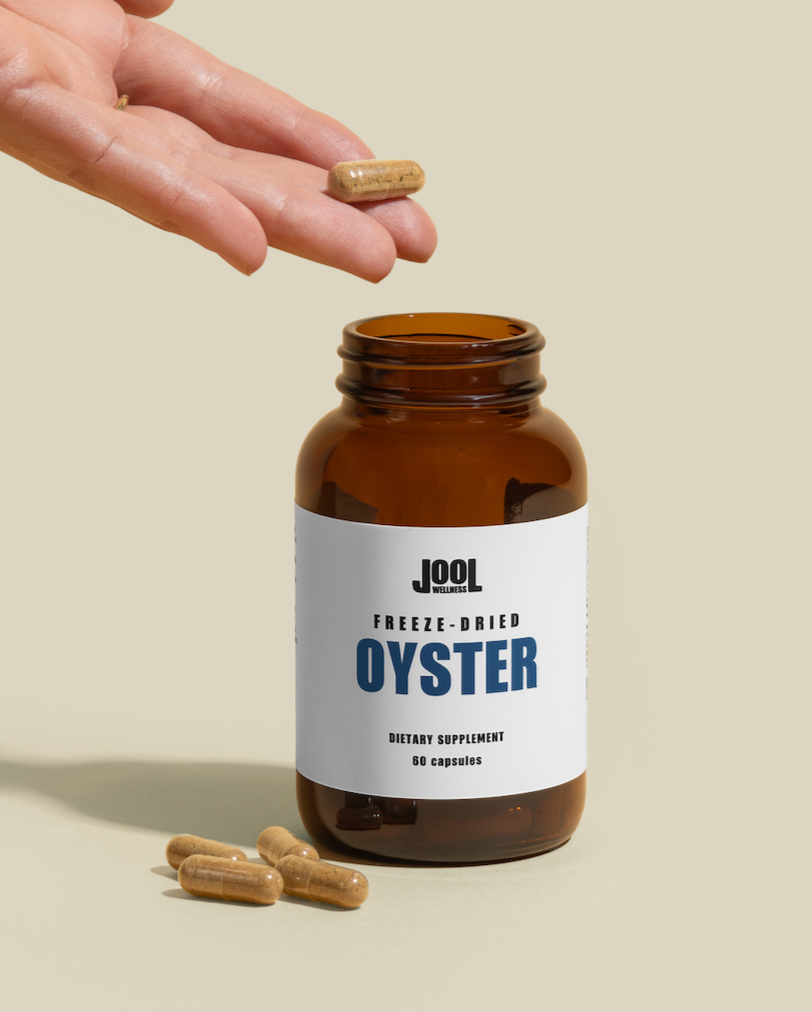
Freeze-dried oysters, like those in JOOL, deliver zinc, copper, selenium, iodine, and complete protein in a form that is easy to digest and efficiently absorbed. (20,21) Zinc supports collagen production and skin repair; copper helps strengthen collagen and elastin; selenium protects cells from oxidative stress; iodine supports thyroid-driven energy production and healthy cell turnover; and protein supplies the amino acids needed to build and maintain skin, hair, and connective tissue. (14)
Eating oysters daily isn’t realistic, or appealing, for most people. A concentrated freeze-dried oyster supplement offers a practical alternative, making it easier to meet micronutrient needs consistently. While supplements don’t replace adequate calories or a balanced diet, they can help close nutritional gaps that limit the body’s ability to repair and renew. When the body has reliable access to these foundational nutrients, it can shift energy away from compensating for deficiency and toward regeneration and resilience.
Addressing aging at its root means supporting the internal biology that drives renewal, not just correcting surface-level changes. JOOL supplements offer support where topical and cosmetic interventions fall short.
The Bigger Reframe
What many chase through cosmetic treatments, fuller skin, elasticity, glow, a more youthful appearance, is actually the result of aging gracefully at the biological level, not forcing the body into looking younger. These outcomes can be achieved naturally when the body has what it needs to repair and regenerate.
True tissue health comes from consistent energy intake, nutrient sufficiency, and balanced hormones. When calories and key micronutrients are reliably available, fibroblasts reactivate, collagen and elastin production resumes, mitochondria operate efficiently, and circulation improves. This is what aging gracefully looks like physiologically: the body maintaining its capacity to renew itself over time.
As a result of supporting longevity naturally, you get the bonus of plumper skin, stronger hair, a healthy metabolism, and that grounded, vibrant “glow” that cannot be created or sustained long-term through external cosmetic treatments alone.
Your body doesn’t need to be forced into youth. By giving it the resources to rebuild from the inside out, you allow it to age gracefully by design, restoring resilience, appearance, and long-term health. Longevity and radiant vitality are not the result of temporary fixes; they begin by feeding and supporting the systems that make renewal possible, honoring the biology that keeps you truly youthful from the cellular level up.
Disclaimer:
This article is for educational purposes only and is not intended to diagnose, treat, or replace medical advice. Individual nutrient needs vary, and supplementation should not be used as a substitute for adequate caloric intake, balanced nutrition, or professional medical care. If you are recovering from an eating disorder, hypothalamic amenorrhea, or another medical condition, consult a qualified healthcare professional before introducing supplements.
Resources:
1. Areta, J. L., Taylor, H. L., & Koehler, K. (2021). Low energy availability: History,
definition and evidence of its endocrine, metabolic and physiological effects in
prospective studies in females and males. European Journal of Applied Physiology,
121(1), 1–21. https://doi.org/10.1007/s00421-020-04516-0
2. Shaulson, E., Cohen, A. A., & Picard, M. (2024). The brain–body energy
conservation model of aging. Nature Aging, 4(10). https://doi.org/10.1038/s43587-
024-00716-x
3. National Institute of General Medical Sciences. (n.d.). Regeneration. National
Institutes of Health. https://www.nigms.nih.gov/education/fact-
sheets/Pages/regeneration.aspx
4. Most, J., & Redman, L. M. (2020). Impact of calorie restriction on energy metabolism in humans. Experimental Gerontology, 133, 110875. https://doi.org/10.1016/j.exger.2020.110875
5. Shahid, M. A., Ashraf, M. A., & Sharma, S. (2023). Physiology, thyroid hormone.
In StatPearls [Internet]. StatPearls Publishing. https://www.ncbi.nlm.nih.gov/books/NBK500006/
6. Villanueva, I., Alva-Sánchez, C., & Pacheco-Rosado, J. (2013). The role of thyroid
hormones as inductors of oxidative stress and neurodegeneration. Oxidative Medicine
and Cellular Longevity, 2013, 218145. https://doi.org/10.1155/2013/218145
7. Horstman, A. M., Dillon, E. L., Urban, R. J., & Sheffield-Moore, M. (2012). The role
of androgens and estrogens on healthy aging and longevity. The Journals of
Gerontology: Series A, 67(11), 1140–1152. https://doi.org/10.1093/gerona/gls068
8. Yegorov, Y. E., Poznyak, A. V., Nikiforov, N. G., Sobenin, I. A., & Orekhov, A. N.
(2020). The link between chronic stress and accelerated aging. Biomedicines, 8(7),
198. https://doi.org/10.3390/biomedicines8070198
9. Zhu, J., & Thompson, C. B. (2019). Metabolic regulation of cell growth and
proliferation. Nature Reviews Molecular Cell Biology, 20(7), 436–450. https://doi.org/10.1038/s41580-019-0123-5
10. Seth, I., Lim, B., Cevik, J., Gracias, D., Chua, M., Kenney, P. S., Rozen, W. M., &
Cuomo, R. (2024). Impact of nutrition on skin wound healing and aesthetic outcomes:
A comprehensive narrative review. JPRAS Open, 39, 291–302. https://doi.org/10.1016/j.jpra.2024.01.006
11. Schroth, J., & Henson, S. M. (2020). Mitochondrial dysfunction accelerates
ageing. Immunometabolism, 2(4), e200035. https://doi.org/10.20900/immunometab20200035
12. Wasserfurth, P., Palmowski, J., Hahn, A., et al. (2020). Reasons for and consequences
of low energy availability in female and male athletes: Social environment,
adaptations, and prevention. Sports Medicine – Open, 6, 44. https://doi.org/10.1186/s40798-020-00275-6
13. Franceschi, C., Garagnani, P., Parini, P., et al. (2018). Inflammaging: A new
immune–metabolic viewpoint for age-related diseases. Nature Reviews
Endocrinology, 14, 576–590. https://doi.org/10.1038/s41574-018-0059-4
14. Espinosa-Salas, S., & Gonzalez-Arias, M. (2023). Nutrition: Micronutrient intake,
imbalances, and interventions. In StatPearls [Internet]. StatPearls Publishing. https://www.ncbi.nlm.nih.gov/books/NBK597352/
15. Lönnerdal, B. (2000). Dietary factors influencing zinc absorption. The Journal of
Nutrition, 130(5 Suppl), 1378S–1383S. https://doi.org/10.1093/jn/130.5.1378S
16. Baddam, S., Maxfield, L., Shukla, S., et al. (2025). Zinc deficiency.
In StatPearls [Internet]. StatPearls Publishing. https://www.ncbi.nlm.nih.gov/books/NBK493231/
17. Tippairote, T., Hoonkaew, P., Suksawang, A., et al. (2026). Aging as the wound that
fails to heal: A bioenergetic continuum of resolution failure. Biogerontology, 27,
Article 7. https://doi.org/10.1007/s10522-025-10356-2
18. Peat, R. (n.d.). Articles. RayPeat.com. https://raypeat.com/articles/
19. Zhang, H., Choong, K., Li, Z., Hao, Y., Cheong, K.-L., & Tan, K. (2025). Nutrition
and nutraceutical values of commercially important oysters: A systematic
review. Reviews in Aquaculture, 17(4). https://doi.org/10.1111/raq.70074
20. Jool Wellness. (n.d.). Jool quality. JOOL Wellness. Retrieved November 18, 2025,
from https://www.joolwellness.com/pages/jool-quality
21. Thiel, R. J. (2000). Natural vitamins may be superior to synthetic ones. Medical
Hypotheses, 55(6), 461–469. https://doi.org/10.1054/mehy.2000.1090
 Back to Education